KiungoKenya Quest
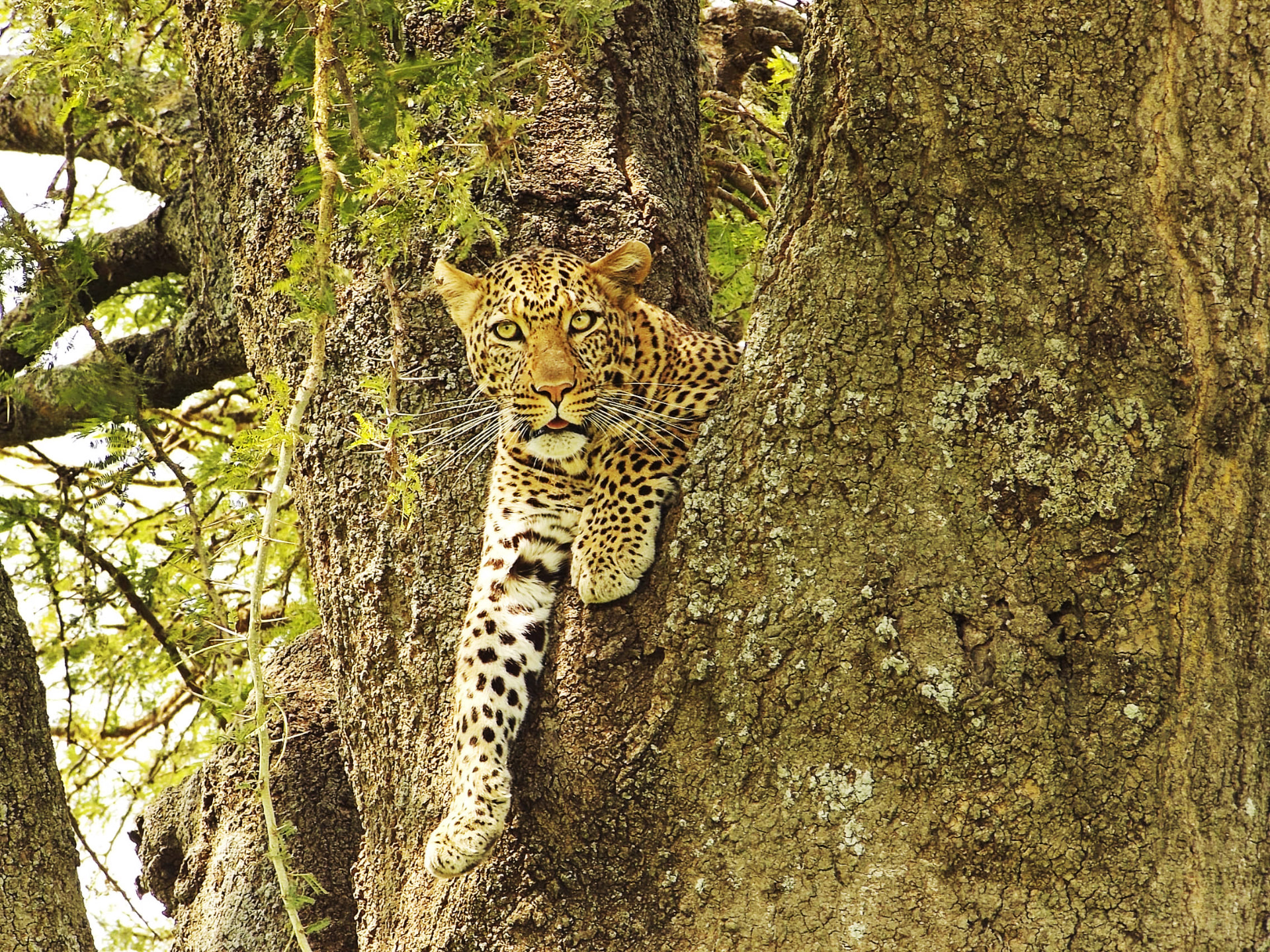
A leopard resting between the trunks of a tree in the Serengeti

Get to know the country

Kenya

From the highlands to the Indian Ocean, Kenya is a place of extraordinary landscapes, vibrant cultures, and meaningful connections.

Say it with us

A little Swahili. A warm connection.

Kiswahili is Kenya’s national language and, alongside English, an official language. A greeting or a simple thank you is a lovely place to begin.

Press the round button on any card to hear the phrase spoken.

Jambo / Hujambo
Hello / How are you?
Jambo
Hujambo
Habari za asubuhi
Good morning
Habari za asubuhi
Habari za mchana
Good afternoon
Habari za mchana
Habari za jioni
Good evening
Habari za jioni
Habari gani?
How are you? (or simply Habari?)
Habari gani?
Habari?
Habari yako?
What's the news?
Habari yako?
Nzuri
Fine / Good (common response to Habari)
Nzuri
Uko sawa? / Niko sawa
Are you okay? / I am okay
Uko sawa?
Niko sawa
Mambo / Poa
What's up? / Cool or I'm fine (casual)
Mambo
Poa
Sawa sawa
Fine / OK / all good (casual agreement)
Sawa sawa
Mambo, mrembo
Hello, beautiful (said to a woman)
Mambo, mrembo
Mambo, mtanashati
Hello, handsome (said to a man)
Mambo, mtanashati
Unaitwa nani?
What is your name? (literally, by what name are you called?)
Unaitwa nani?
Naitwa...
My name is... (literally, I am called...)
Naitwa
Asante (or Asante sana)
Thank you (very much)
Asante
Asante sana
Karibu
Welcome / You're welcome
Karibu
Tafadhali
Please
Tafadhali
Samahani
Excuse me / Sorry
Samahani
Choo kiko wapi?
Where is the toilet?
Choo kiko wapi?
Bafu iko wapi?
Where is the bathroom?
Bafu iko wapi?
Nahitaji kahawa
I need coffee (or I'd like a coffee)
Nahitaji kahawa
Tusker tafadhali
Tusker, please (Tusker is Kenya's best-known beer)
Tusker tafadhali
Nimekuja kupiga sherehe
I have come to party (I have come to celebrate)
Nimekuja kupiga sherehe
Pole pole
Slowly / Take it easy
Pole pole
Hakuna matata
No worries / No problem
Hakuna matata
Lala salama
Sleep well / Good night
Lala salama
Kwa heri
Goodbye
Kwa heri

Kenya at a glance

At the heart of East Africa.

Kenya straddles the Equator, with the Great Rift Valley, Mount Kenya, fertile highlands, savanna landscapes, and an Indian Ocean coastline. Its neighbors are Ethiopia, Somalia, South Sudan, Uganda, and Tanzania.

Nairobi is the capital and a regional hub for culture, business, and diplomacy. Beyond the city, Kenya’s diverse communities and local traditions are at the heart of every visit.

Capital
Nairobi
Official languages
Kiswahili & English
Currency
Kenyan shilling (KES)
Time zone
East Africa Time · UTC+3
Area
580,367 km²
Population
54.9 million2024 UN estimate
Counties
47
Location
East Africa · on the Equator

Sources: Kenya Ministry of Foreign Affairs, Central Bank of Kenya, and UK country factfile. Population is a dated estimate, not a live count.

Kenya in East AfricaKenya is highlighted among its East African neighbors. Lake Victoria is blue, with its shoreline drawn at the same scale as the countries. A dashed line shows the approximate Great Rift Valley corridor through Kenya. Marked on the map are Nairobi, Mombasa, Zanzibar, Mount Kenya, Kilimanjaro, and the Maasai Mara, Amboseli, Tsavo, Samburu and Serengeti parks and reserves.Lake Victoria, shoreline to scaleGreat RiftValleyEquatorLakeVictoriaSOUTH SUDANETHIOPIASOMALIAUGANDATANZANIAKENYASamburu National ReserveSamburuMount Kenya, 4,985 mMount KenyaMaasai Mara National ReserveMaasai MaraAmboseli National ParkAmboseliSerengeti National Park, just across the border in TanzaniaSerengetiTsavo East and West National ParksTsavoMount Kilimanjaro, 5,895 m, just across the border in TanzaniaKilimanjaroMombasa, on the Indian Ocean coastMombasaZanzibar City, on Unguja island off Tanzania's coastZanzibarNairobiIndian Ocean
PeakPark or reserveCityRift Valley (approximate)
East Africa · Map outlines: Natural Earth · Rift Valley corridor is schematicView on Google Maps
The full Great Rift Valley regionA schematic overview from the Levant through the Red Sea and Gulf of Aden, Ethiopia, Kenya and the western lake branch to Malawi and Mozambique. Countries along the land rifts and bordering the offshore arms are labeled. Kenya is gold; other countries are teal. Dashed lines are approximate corridors, not surveyed faults.Levant and Red SeaGulf of AdenEastern branchWestern branchMalawi and MozambiqueSyriaLebanonIsraelPalestineJordanEgyptSaudi ArabiaSudanEritreaYemenDjiboutiEthiopiaKenyaUgandaDR CongoRwandaBurundiTanzaniaZambiaMalawiMozambiqueIndian Ocean
Dashed lines: schematic rift corridors. Country outlines: Natural Earth (public domain). Shoreline labels identify neighbors of offshore rifts, not land crossed by a fault.

Beyond Kenya

The Great Rift Valley.

Kenya is part of a much larger rift landscape. In its broad historical sense, the Great Rift Valley links the Levant and Red Sea with East Africa, stretching roughly 4,000 miles (6,400 km) toward Mozambique.

Northern land corridor
Syria, Lebanon, Israel, Palestine, and Jordan.
Red Sea, Gulf of Aden, and Afar
Egypt, Saudi Arabia, Sudan, Eritrea, Yemen, and Djibouti border the offshore arms; the rifts meet in the Afar region around Ethiopia, Eritrea, and Djibouti.
Eastern branch
Ethiopia, Kenya, and Tanzania, including Kenya’s lake country and dramatic escarpments.
Western branch and southern continuation
Uganda, the Democratic Republic of the Congo, Rwanda, Burundi, and Tanzania along the western lake rifts; Zambia at the southern Lake Tanganyika margin, then Malawi and Mozambique farther south.

This is a family of connected and branching rifts, not one continuous valley. The modern East African Rift is the African portion of this broader historical region.

Sources (consulted October 12, 2026): Britannica: East African Rift System; USGS: East African Rift.

Weather & climate

One country. Many climates.

Kenya sits on the Equator, but its weather is shaped as much by elevation, lakes, and the Indian Ocean as by latitude. Temperatures vary substantially between the coast, highlands, dry savanna, and mountain terrain.

City ranges below span monthly average daily highs and lows for 1991–2020, not record extremes or forecasts. Seasonal examples compare Nairobi and Mombasa; regional examples use named reference locations.

The seasonal rhythm

January & February

Generally drier

Often a drier window in much of the country. Elevation still creates significant differences between daytime and nighttime temperatures.

Nairobi: daytime highs 26.9 to 28.3°C (80.4 to 82.9°F); nighttime lows 13.9 to 14.0°C (57.0 to 57.2°F).

Mombasa: daytime highs 32.4 to 32.8°C (90.3 to 91.0°F); nighttime lows 23.3 to 23.6°C (73.9 to 74.5°F).

March to May

The long rains

The main rainy season across much of Kenya. Showers can be heavy, landscapes turn green, and some rural roads become muddy.

Nairobi: daytime highs 24.8 to 28.0°C (76.6 to 82.4°F); nighttime lows 14.6 to 15.4°C (58.3 to 59.7°F).

Mombasa: daytime highs 29.7 to 32.9°C (85.5 to 91.2°F); nighttime lows 22.6 to 24.3°C (72.7 to 75.7°F).

June to September

Interior dry season

Much of the interior is relatively dry; highlands can be cloudy. Western Kenya and the coast can still receive rain.

Nairobi: daytime highs 23.2 to 26.0°C (73.8 to 78.8°F); nighttime lows 11.8 to 13.0°C (53.2 to 55.4°F).

Mombasa: daytime highs 28.1 to 28.8°C (82.6 to 83.8°F); nighttime lows 20.3 to 21.4°C (68.5 to 70.5°F).

October to December

The short rains

A second rainy season in many areas, often with showers between brighter spells. Its timing and intensity vary considerably from year to year.

Nairobi: daytime highs 25.1 to 26.9°C (77.2 to 80.4°F); nighttime lows 14.4 to 15.1°C (57.9 to 59.2°F).

Mombasa: daytime highs 29.7 to 31.9°C (85.5 to 89.4°F); nighttime lows 22.1 to 23.4°C (71.8 to 74.1°F).

Microclimates, region by region

Indian Ocean coast

Mombasa: daytime highs 28.1 to 32.9°C (82.6 to 91.2°F); nighttime lows 20.3 to 24.3°C (68.5 to 75.7°F).

Humidity and sea breezes shape coastal conditions. Rainfall does not always follow the interior’s seasonal pattern.

Nairobi & the highlands

Nairobi: daytime highs 23.2 to 28.3°C (73.8 to 82.9°F); nighttime lows 11.8 to 15.4°C (53.2 to 59.7°F).

Nairobi is a reference for the elevated interior, not every highland location. Higher tea-growing areas differ, particularly at night.

Northern & eastern lowlands

Lodwar: daytime highs 33.5 to 37.3°C (92.3 to 99.1°F); nighttime lows 22.0 to 25.2°C (71.6 to 77.4°F).

Lodwar represents the Turkana lowlands, not all eastern Kenya. Much of this region is arid or semi-arid with limited, unreliable rainfall. Shade, drinking water, and sun protection matter in every season.

Great Rift Valley

Nakuru: daytime highs 23.8 to 28.2°C (74.8 to 82.8°F); nighttime lows 11.1 to 13.0°C (52.0 to 55.4°F).

Nakuru represents the elevated Rift. Compare the Lodwar ranges above for the low-lying Turkana basin. Escarpments, lakes, and rain shadows create local contrasts; these are not temperature limits for Magadi or Naivasha.

Western Kenya & Lake Victoria

Kisumu: daytime highs 28.2 to 31.5°C (82.8 to 88.7°F); nighttime lows 16.7 to 18.3°C (62.1 to 64.9°F).

Kisumu represents the lakeshore. Rain is spread more widely through the year, and moisture and local lake breezes can encourage afternoon thunderstorms.

Mount Kenya & the Aberdares

Mount Kenya trekking guidance: daytime 6.0 to 20.0°C (42.8 to 68.0°F) at roughly 2,800–4,000 m; nighttime -5.0 to 5.0°C (23.0 to 41.0°F) above 4,000 m.

These are approximate trekking ranges across seasons, not station averages or limits for every altitude. Point Lenana summit nights can reach −10°C (14°F) or lower. Aberdare conditions depend on elevation and route. Rain, mist, or strong winds can arrive even in a generally dry month.

Pack for your route, not just the month: light breathable clothing, a rain layer, sun protection, and an insulating layer for highland evenings. Mountain trips need specialized gear rated for the expected temperatures. These are typical patterns, not a forecast; check local conditions before traveling.

Sources: Red Cross Red Crescent Climate Centre, Kenya profile (2024); World Bank Climate Change Knowledge Portal; Britannica, Kenya’s climate; Climates to Travel: Nairobi (1991–2020 averages); Climates to Travel: Mombasa (1991–2020 averages); Climates to Travel: Lodwar (1991–2020 averages); Climates to Travel: Nakuru (1991–2020 averages); Climates to Travel: Kisumu (1991–2020 averages); Ahambi Tours, Mount Kenya altitude and seasonal trekking temperatures (March 2025). Overview reviewed October 12, 2026.

Business & economy

An East African hub for enterprise.

Kenya combines a diversified economy with a strong entrepreneurial culture. Nairobi is a regional hub for finance, technology, and professional services, while agriculture, manufacturing, tourism, and logistics connect the country to its neighbors and the wider world.

Its business strengths include a skilled workforce, established financial services, and regional transport links. The climate also has challenges: public debt and fiscal pressure, barriers to competition, and uneven access to formal employment. The World Bank’s November 2025 update reported stronger growth momentum, while emphasizing the need for reforms that support investment and better-paying jobs.

Leading industries

Agriculture & agribusiness

Farming supports livelihoods across the country and supplies export crops as well as food processing. Tea, coffee, and horticulture connect rural producers with international buyers.

Finance & business services

Nairobi is a regional center for banking, insurance, legal services, and consulting, supporting Kenyan enterprises and international companies operating in East Africa.

Technology & digital services

Kenya’s entrepreneurial technology sector spans mobile financial services, e-commerce, and digital platforms. ICT is an important part of the country’s regional business role.

Manufacturing

Food processing, textiles and apparel, metal products, and vehicle assembly are part of Kenya’s industrial base, linking local production with regional and overseas markets.

Tourism & hospitality

Wildlife safaris, coastal stays, conferences, and cultural experiences support accommodation, guiding, transport, and other visitor services.

Trade & logistics

Ports, airports, roads, and rail connections make Kenya a gateway for regional commerce. Transport and distribution link producers, cities, and neighboring markets.

Major exports

Agricultural products and manufactured goods both feature in Kenya’s export economy. These are key product groups, not a ranked list. Tourism is a service export, distinct from the goods below.

Tea & coffee
Tea is a major agricultural export, alongside coffee grown in Kenya’s highlands.
Flowers & fresh produce
Cut flowers, fruits, and vegetables are important horticultural exports; nuts also reach international markets.
Apparel & textiles
Clothing is an established manufactured export, with the United States an important destination.

Sources: World Bank: Kenya Economic Update (November 2025); U.S. International Trade Administration: market overview (July 2024); U.S. International Trade Administration: agribusiness (country commercial guide).

Overview reviewed October 12, 2026. Sources are dated; business conditions and trade rules can change. This is general country context, not investment advice.

Living heritage

A country of many communities.

Kenya is home to 44 tribes/ethnic communities. That number is not a fixed boundary: recognition and ways of grouping communities have changed over time. The National Museums of Kenya’s cultural profiles describe 44 communities, each contributing to a shared national story.

Many Kenyan languages belong to three broad families: Bantu, Nilotic, and Cushitic. Kikuyu, Luhya, Kamba, and the nine Mijikenda communities are among the Bantu-speaking peoples; Luo, Maasai, and Kalenjin communities speak Nilotic languages; Somali and Rendille are among the Cushitic-speaking peoples. These are broad linguistic connections, not a complete list or a single way of life.

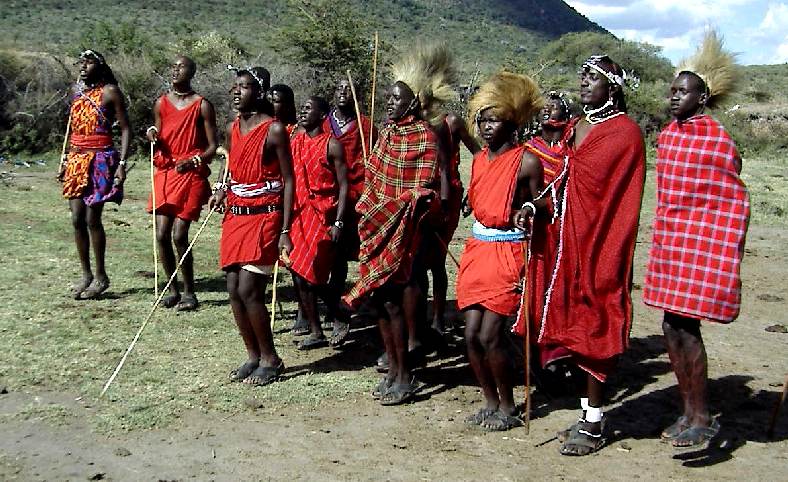
Kenya’s heritage lives in languages, music, storytelling, food, faith, and family traditions, and in contemporary cities, creative work, and everyday life. Maasai song and dance are one expression of this diversity, not a portrait of every Kenyan. Approach cultural visits as exchanges between people: listen, ask permission before taking photographs, and respect each host’s customs.

Cultural sources: National Museums of Kenya and its community heritage profiles.

Maasai dancers performing a traditional jumping dance in Kenya

Maasai dance · one of Kenya’s many living cultural traditions.

Photo: Nezumi / Wikimedia Commons · CC BY-SA 3.0

Visitor safety

Travel thoughtfully. Stay informed.

Good preparation and reliable local advice matter. No destination or itinerary can promise risk-free travel.

Kenya welcomes international visitors to its cities, communities, wildlife areas, and coast, but safety conditions vary by location. Official travel advice identifies risks including crime, terrorism, and kidnapping, with stronger warnings for some border and northeastern areas. Check the latest guidance for your exact itinerary rather than treating the whole country as equally safe.

Use reputable transport and accommodation, avoid walking alone after dark, keep valuables discreet, and stay away from demonstrations. Follow your hosts’ and guides’ advice, including around wildlife. Before departure, arrange suitable travel insurance, discuss vaccinations and malaria prevention with a travel-health professional, and keep emergency contacts accessible.

Regional restrictions can change and differ between governments. Review your own country’s advice before booking and again before departure; travel against official advice may affect insurance cover.

Guidance reviewed 10 October 2026. Follow the official links for current regional warnings and updates.

Your journey, your purpose

Experience Kenya through genuine connection.

Plan your trip